Deepak Sathyan
Postdoctoral Research Associate at The Mitchell Institute for Fundamental Physics and Astronomy, Texas A&M University

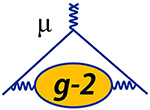
As an undergraduate at Boston University, I worked on the Muon g-2 experiment, whose measurement of the muon anomalous precession frequency is one of the most precisely measured observables of nature.
My research as a graduate student at the University of Maryland primarily focused on collider phenomenology, specifically searching for new physics beyond the standard model (BSM) at the Large Hadron Collider (LHC). I explored novel BSM searches through precision measurements of Standard Model observables like the W-boson mass and by pushing the high energy frontier. I am still exploring what the LHC can detect, from models of dark matter to models of baryon number violation, one of the conditions needed to explain the matter-antimatter asymmetry of the universe.
More recently, I have thought about methods to probe interactions between dark matter and neutrinos through cosmological, astrophysical, and laboratory observations. Such studies could help address questions of the nature and mass scale of dark matter, neutrino mass, and possible neutrino non-standard interactions. This research has also led me to develop a deeper understanding of astrophysical sources of neutrinos such as supernovae and active galactic nuclei, as they present opportunities to probe interactions with experiments like IceCube, DUNE, Hyper-K, and JUNO.
selected publications
- Intensity-Frontier Signals of Warped Extra DimensionsAug 2026
- Producing the GeV Galactic Center Excess via Cosmic Ray-Dark Matter ScatteringMay 2026
-
-
-



